
The Complete Guide to Event Production & AV in Hawaii

Key Takeaways:
Planning audiovisual and event production for a Hawaii event involves more than renting microphones, screens, and lighting. It takes the right equipment, experienced technicians, venue coordination, realistic budgeting, and an understanding of island logistics.
Costs: AV budgets vary from a few thousand dollars for straightforward rentals and meetings to more than $700,000 for complex multi-day productions. Equipment, labor, LED displays, venue requirements, and transportation influence pricing.
Scope: Smaller meetings may need equipment rentals and basic setup, while conferences, awards galas, and incentive programs often benefit from full-service technical production.
Equipment: Sound systems, video displays, lighting, and presentation technology should be designed around the room, audience, and agenda.
Booking lead time: For typical programs, allow 6–12 weeks on Oʻahu, Maui, or Hawaiʻi Island, and 8–16 weeks for Kauaʻi or Lānaʻi when possible. Larger productions should ideally begin planning 3–6 months ahead. Shorter-notice events may still be accommodated.
Local support: Island-based equipment, knowledgeable crews, and contingency planning help minimize logistical complications.
Venues: Most Hawaii resorts allow outside AV companies, but fees for patching, rigging, power, and internet vary by property.
AVS Audio Visual Services Hawaii has served the islands since 1999, with warehouses on Oʻahu, Maui, and Hawaiʻi Island supporting events statewide, including Kauaʻi and Lānaʻi. AVS is a member of the Event Production Network (EPN), an invitation-only alliance of North American event production companies.
What Does Event AV Cost in Hawaii?
Event audiovisual costs in Hawaii vary widely, from a few thousand dollars for straightforward meetings and equipment rentals to more than $700,000 for major multi-day productions. Equipment requirements, technical staffing, event duration, number of rooms, venue fees, and transportation are primary factors influencing the budget.
Production type | Illustrative AV budget |
Smaller meetings and equipment rentals | Under $10,000 possible |
Corporate meeting or focused AV support | $10,000–$25,000 |
Conference, general session, or awards event | $25,000–$100,000 |
Large conference or multi-room production | $100,000–$300,000 |
Major incentive or integrated production | $300,000–$700,000+ |
Actual pricing depends on production design, not attendance alone. These are general planning allowances, not standardized packages, minimum charges, or guaranteed AVS rates.
1. Equipment and production design: LED video walls, multiple projection screens, advanced lighting, and camera systems add complexity and expense
2. Labor and event schedule: Installation, rehearsals, show operation, overtime, and strike determine technical staffing requirements
3. Location and logistics: Island, venue access, freight, rigging, and electrical requirements affect transportation and installation costs.
Working with a Hawaii-based production company can reduce some transportation expenses when the appropriate equipment is available locally.
See our full breakdown of event AV costs in Hawaii, including LED video wall ranges, venue fees, and interisland logistics. You can also explore our LED video wall rentals and event pipe and drape rentals.

Do You Need AV Rentals or Full-Service Event Production?
AV equipment rentals are appropriate when your technical needs are straightforward, and someone on your team can operate the equipment. Full-service production is recommended when an event requires coordinated audio, video, lighting, rehearsals, or dedicated technical management.
Equipment-only rentals: A small executive meeting or training session might need a microphone, speakers, a display, and basic presentation equipment. When the venue and program are simple, a rental package with setup may be sufficient.
Rentals with technical support: A panel discussion, seminar, or breakout session may benefit from an onsite technician who manages microphones, presentations, and unexpected technical issues. This provides professional oversight without requiring a larger production crew.
Full-service event production: Conferences, awards ceremonies, incentive programs, and executive presentations often require production planning, technical direction, audio engineers, video operators, lighting technicians, and coordinated show cues.
The most important consideration is not just audience size but the consequences of something going wrong. Events with live presentations, multiple speakers, complicated transitions, or high-profile audiences benefit from dedicated technical support.
Compare the options in AV rentals vs. full-service event production, and see what our event management services cover.
What AV Does Your Event Type Need?
The audiovisual equipment your Hawaii event needs depends on its format, audience, venue, and presentation goals. Conferences need clear speech and screens in every room, galas and incentives need lighting and LED for atmosphere, and concerts need a system built to the artist's technical rider.
Conferences and seminars: Clear sound reinforcement, microphones, projection or LED displays, confidence monitors, and breakout-room support.
Incentive programs: One crew covering the general session, outdoor welcome reception, and awards night, often at a single resort.
Awards galas: Stage lighting, LED video backdrops, music playback, wireless microphones, and coordinated award-presentation cues.
Trade shows and expos: General-session AV, exhibitor displays, and digital signage at venues like the Hawaiʻi Convention Center.
Concerts and live performances: Professional sound reinforcement, stage monitors, performance lighting, and equipment matched to artist riders.
AVS also supports higher education and nonprofit and community events. Many destination programs combine several formats in one week, so planning them with one crew avoids duplicating equipment and freight. See who we help.
What Audiovisual Equipment Will Your Event Need?
Most Hawaii events require three essential systems: audio, video, and lighting. LED is the usual choice for outdoor and daylight events. Projection is a cost-effective option in ballrooms where ambient light can be managed.
Best for | Watch for | |
Projection | Meeting rooms and ballrooms with controllable light | Washes out in daylight and open-air spaces |
LED wall | Outdoor events, large general sessions, branded stages | Higher cost; flown walls need venue rigging approval |
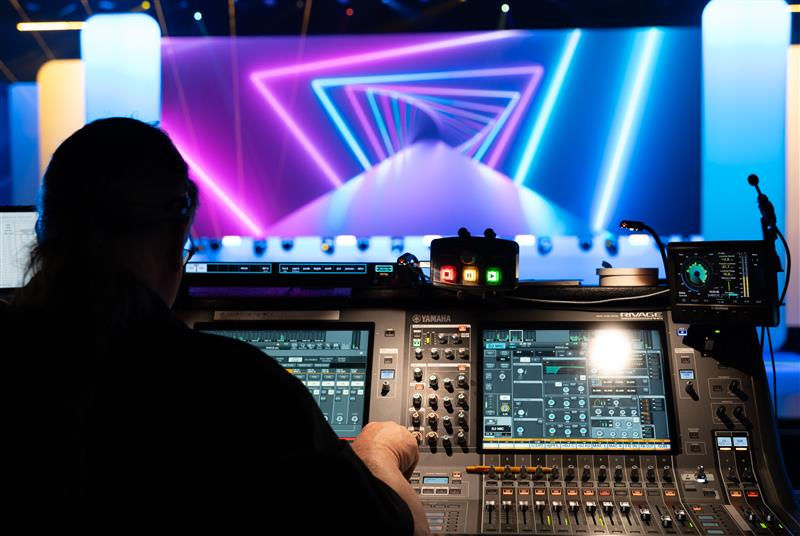
Audio: A small meeting may need only compact speakers and a few microphones. Ballrooms, outdoor receptions, and entertainment need distributed speakers, mixing consoles, and audio technicians. AVS uses d&b audiotechnik sound systems.
Video: Our fine-pitch INFiLED DB 2.6mm LED walls are built for close-viewing ballrooms and general sessions.
Lighting: Basic stage lighting keeps presenters visible. Additional lighting reinforces branding and turns a conference ballroom into a gala.
Depending on your agenda, you may also need presentation switchers, confidence monitors, cameras, recording, intercom, and playback computers. Explore audio, lighting, and video equipment rentals, event staging, and our full equipment inventory.

What Will Your Hawaii Event Venue Allow?
Many Hawaii hotels, resorts, and event venues permit outside audiovisual companies, but each property may have different vendor requirements, equipment restrictions, and fees. Ask the hotel for its outside AV vendor policy before you sign the venue contract.
In-house AV arrangements: Some venues have preferred or exclusive AV providers. AVS can serve as your primary AV provider or work alongside the hotel's in-house team.
Patch, power, and internet fees: Venues may charge to connect outside equipment to house sound or video systems, and for electrical service and dedicated internet. These charges are not always in the AV company's proposal.
Rigging and approvals: Flown equipment may require drawings, insurance documentation, engineering review, or venue authorization. See our event rigging services.
Access: Loading docks, freight elevators, ceiling heights, and outdoor sound restrictions affect equipment choices and labor.
How Does Event Production Work Across the Hawaiian Islands?
Event production across Hawaii requires careful coordination of equipment, technical staffing, transportation, and backup resources. AVS maintains warehouses on Oʻahu, Maui, and Hawaiʻi Island and supports events throughout the state, including Kauaʻi and Lānaʻi.
Island | Served from | Recommended lead time |
Kapolei warehouse | Approximately 6–12 weeks | |
Maui: Wailea, Kāʻanapali, Kapalua | Wailuku warehouse | Approximately 6–12 weeks |
Hawaiʻi Island: Kona, Kohala Coast | Kailua-Kona (AVS headquarters) | Approximately 6–12 weeks |
Kauaʻi: Poʻipū, Līhuʻe | Coordinated freight and traveling technicians | Approximately 8–16 weeks |
Coordinated freight and traveling technicians | Approximately 8–16 weeks |
Large, multi-day, or technically complex productions should ideally begin 3–6 months ahead, regardless of island. Shorter-notice events may still be possible depending on equipment availability, staffing, and event requirements.
Freight: Events on Kauaʻi and Lānaʻi, and events that need specialized inventory, are scheduled around interisland shipping.
Backup: Equipment stocked on the same island means backup systems don't depend on an interisland shipment.
How Do You Choose an AV Company in Hawaii?
Choose a Hawaii audiovisual company based on local knowledge, equipment availability, technical expertise, transparent pricing, and demonstrated production experience. A successful event requires more than equipment at a competitive price; it requires a team capable of planning and delivering a dependable production.
Five criteria are particularly important.
1. Local venue knowledge: Has the company worked at your venue or comparable Hawaii properties? Familiarity with resort operations, loading requirements, and technical infrastructure can save time and prevent problems.
2. Equipment availability: Does the company own and maintain professional equipment in Hawaii, or will it need to transport most of the inventory from another location?
3. Technical staffing: Can it provide experienced audio, video, lighting, and production professionals appropriate for your event?
4. Transparent proposals: Are equipment, labor, transportation, setup, strike, and possible additional charges clearly identified?
5. Proven track record: Can the company share relevant event examples, references, and contingency procedures?
Industry relationships can provide another useful measure of credibility. AVS belongs to the Event Production Network (EPN), a network of professional event production companies.
Read how to choose the right AV partner for a corporate event in Hawaii, what to ask an AV company before booking, and how EPN supports our productions.
Why Does Local Experience Matter for Hawaii Event Production?
Local experience matters because producing events in Hawaii involves venue conditions, transportation logistics, and environmental factors that can differ significantly from mainland events. An experienced island-based production team can anticipate challenges before they affect your event.
Three examples illustrate why this matters.
1. Resort Ballroom Logistics
Hotels may have limited loading docks, designated freight elevators, strict installation schedules, or complicated access routes.
Knowing these conditions helps production teams plan appropriate crew sizes, delivery schedules, and equipment configurations.
2. Outdoor Event Conditions
Beachfront lawns, resort courtyards, and open-air venues require careful attention to wind, rain, daylight, electrical distribution, and ambient noise.
Planning for these conditions helps protect equipment, maintain audience visibility, and create safer production environments.
3. Equipment Availability and Changing Requirements
Last-minute additions, presentation changes, or technical problems can require additional equipment or modified systems.
Local inventory, experienced technicians, and established supplier relationships provide more options when an event evolves.
AVS Audio Visual Services Hawaii has supported corporate events, conferences, entertainment programs, and special events across the islands since 1999. Our experience combines local venue familiarity with professional equipment, technical staffing, and statewide production support.
Read what 25 years of Hawaii event production teaches you, view our event production gallery, or learn about AVS.
Planning an Event in Hawaii? Let's Make It Happen
Whether you're planning a corporate conference on Oʻahu, an incentive program on Maui, an awards gala on Hawaiʻi Island, or a special event on Kauaʻi, AVS Audio Visual Services Hawaii is ready to help.
Since 1999, we've supported events across the islands with professional audio, video, lighting, LED displays, and experienced technical teams. With warehouses on three Hawaiian Islands and service throughout the state, we can help you plan equipment, staffing, logistics, and production from start to finish.
Tell us about your event. Share your dates, venue, attendance, agenda, and production goals. We'll help develop an audiovisual solution that fits your program.
Frequently Asked Questions
What should we provide to get a preliminary audiovisual budget?
Provide your event dates, venue, estimated attendance, agenda, and room requirements. Include any planned entertainment, video recording, livestreaming, or special presentation needs.
If available, share floor plans and a target budget. These details help the production company prepare a meaningful estimate and identify potential logistical expenses before designing the final system.
Should different events within the same incentive program use one production company?
Using one production partner can simplify communication, technical planning, scheduling, and equipment coordination across multiple functions.
General sessions, welcome receptions, awards dinners, and entertainment may require different systems, but one coordinated team can help maintain consistent production standards and reduce unnecessary duplication of labor or equipment.
What should we consider when moving an indoor event outdoors?
Moving outdoors changes sound coverage, video visibility, lighting, power distribution, and equipment protection requirements.
The production team must also assess wind, weather, ground conditions, and venue restrictions. An outdoor setup should be reviewed as a different technical environment rather than assuming the original indoor equipment package will work unchanged.
Can audiovisual equipment be transported between Hawaiian Islands during an event program?
Yes, although equipment movement depends on transportation availability, shipping schedules, and the time available between events.
Programs moving between islands should be planned carefully to account for packing, freight, delivery, setup, and testing. In some cases, using inventory already located on each island may be more efficient.
What should be included in an audiovisual contingency plan?
A contingency plan should identify critical equipment, potential technical failures, available backup systems, and the people responsible for resolving problems.
Depending on the event, it may also address weather, electrical interruptions, presentation failures, and transportation delays. The appropriate level of redundancy depends on production complexity and risk.
Can AVS support an event program taking place on multiple Hawaiian Islands?
Yes. AVS supports events throughout Hawaiʻi using warehouses on Oʻahu, Maui, and Hawaiʻi Island, along with coordinated interisland transportation and technical staffing.
For programs involving multiple destinations, our team can help plan equipment availability, production requirements, and schedules to support consistent execution from one island to the next.


Comments