
AV Rentals vs. Full-Service Event Production in Hawaii — What's Actually the Difference
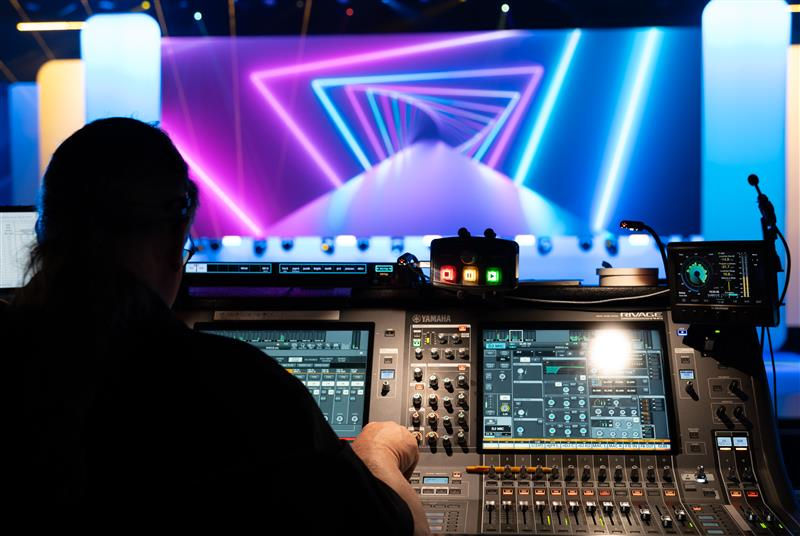
It's a scenario that comes up more than most planners expect. You start pricing out AV for an upcoming event, get a rental quote that looks reasonable, and figure your team can handle the rest. Then you start thinking through the actual day — the general session, the breakout rooms, the awards dinner, the CEO's presentation with video playback and a live feed to remote attendees — and you realize nobody on your team has ever actually run a soundboard.
This is one of the most common points of confusion we see in Hawaii event planning. Not because planners aren't prepared, but because the line between "we just need some equipment" and "we need a production team" isn't always obvious until you're already three weeks out.
The difference between AV rentals and full-service event production is real, and getting it wrong in either direction costs you — either money you didn't need to spend or a program that falls apart when something goes wrong, and there's no one qualified to fix it.
Here's what each one actually means, and how to know which one your event needs.
What AV Rentals Actually Mean
When you rent AV equipment, you are paying for gear. A company delivers speakers, microphones, screens, projectors, lighting rigs, or whatever the order includes. They set it up, walk you through the basics, and leave. When the event is over, they come back and pick everything up.
That's it. The equipment is there. What happens in between is on you.
For the right event, that's a perfectly reasonable arrangement. A small internal meeting with a simple presentation and someone on staff who's comfortable running a laptop and a microphone doesn't need a full production crew. A rehearsal, a training session, a low-stakes breakout — AV rentals can make sense. AVS Audio Visual Services Hawaii maintains audio, video, and lighting rental inventory across our Hawaii warehouses for exactly these situations.
But when you go the rental route, you are accepting responsibility for everything that happens once the truck drives away. If the projector image looks wrong, you fix it. If the microphone cuts out during a presentation, you figure it out. If a cable is missing or a setting is off, that's your problem to solve in real time, in front of your guests.
AV rentals are a tool. They're not a plan.
What Full-Service Event Production Actually Means
Full-service event production means you're not just getting equipment. You're getting a team, a process, and someone accountable for how the event runs from load-in to strike.
The difference isn't just labor. It's expertise applied in real time. A production team knows what a general session feels like from the front of house. They know how to adjust audio when a room fills up and the acoustics shift. They know how to keep a program moving when a speaker runs long or a video file doesn't play. They know what to do before you know something needs doing.
Full-service event production also scales. It doesn't mean your event has to be enormous. It means that whatever the size of your program, professionals are running it — and you're not the one troubleshooting a failing wireless microphone five minutes before the keynote. Our event production services and event management support cover everything from pre-event planning through day-of execution across all of the Hawaiian Islands.
The Hawaii Factor
This is where the AV rentals versus full-service event production conversation gets more complicated than it does on the mainland, and it's worth being direct about. Hawaii is not one market. It's several islands, each with its own logistics, its own venues, its own weather patterns, and its own set of variables that don't exist when you're producing an event in the Mainland.
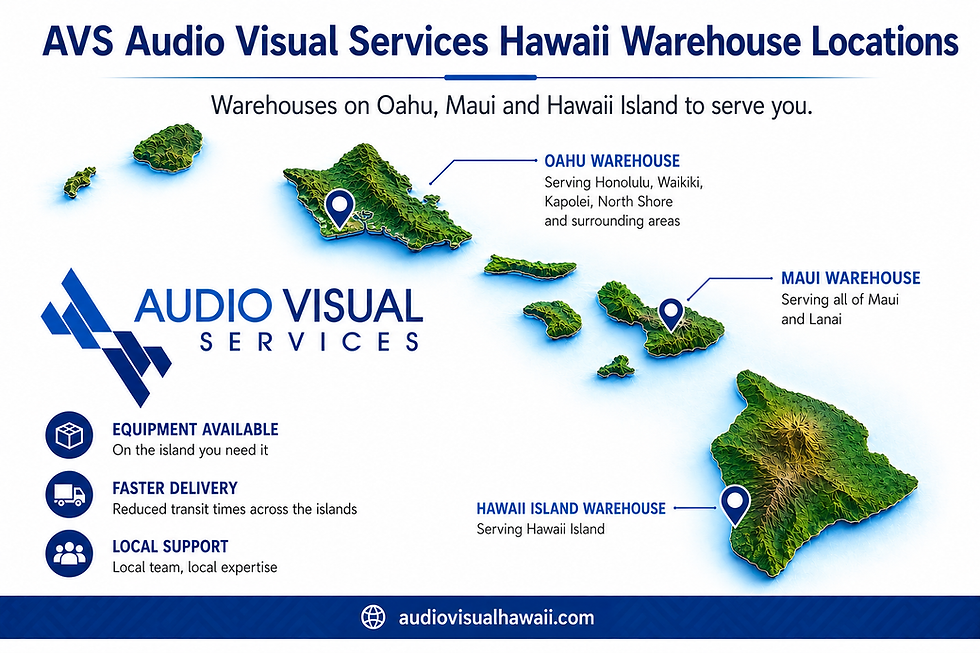
AVS Audio Visual Services Hawaii keeps warehouses on O'ahu, Maui, and the Island of Hawaii — which means when something is needed on short notice, the answer isn't a phone call to another island, it's a drive to the warehouse. That's not a logistical footnote. It's a real part of how we back up every event we produce.
See the full picture of where we operate across the state.
How to Know Which One You Actually Need
This is the honest version of that question, not the version designed to push you toward the more expensive option.
Ask yourself:
Do you have someone on your team who is genuinely comfortable operating AV equipment during a live event — not just pressing play on a laptop, but managing audio levels, switching video sources, and troubleshooting in real time if something goes wrong?
Is this event client-facing, high-stakes, or tied to your organization's reputation? A board meeting where the projector flickers is embarrassing. A CEO keynote where the audio cuts out in front of 400 guests is a different situation entirely.
Does your venue have technical requirements, union rules, or rigging restrictions you don't fully understand? Hawaii resort properties in particular often have specific requirements that can catch outside vendors off guard.
What is the actual cost of something going wrong? Not in dollars, but in client relationships, professional reputation, and the experience of every person in the room.
If any of those questions made you uncomfortable, you're probably looking at full-service event production, not AV rentals.

Where It Gets Confusing
Not every engagement is cleanly one or the other, and some companies offer options that sit in between — a technician for the day alongside a rental package, partial crew support for a specific element like livestreaming or LED operation, or day-of production management without full project planning.
These hybrid arrangements can work well when the scope is clearly defined, and both sides understand exactly what's included. The risk is when the line gets blurry. A quote that includes "one technician" without specifying their role, availability, and responsibilities during the show can leave gaps you won't discover until something needs attention mid-program.
When evaluating any quote that falls between AV rentals and full-service event production, ask specifically: who is responsible for each element of the show, and what happens if something goes wrong with a piece of equipment or a technical cue during the event?
If the answer is clear and specific, you're in good shape. If it's vague, ask again.
What This Looks Like in Real Hawaii Events
Every event is different, but a few common scenarios help illustrate where the line usually falls.
A small board meeting at a Honolulu hotel with a simple presentation, one microphone, and a screen — AV rentals are likely fine, especially if a staff member is comfortable running the equipment and the stakes are low.
A 300-person corporate conference on Maui with a general session, multiple breakout rooms, an awards dinner, and a hybrid component for remote attendees — this is full-service event production. The complexity, the audience size, the hybrid element, and the multi-room coordination require a team, not just gear.
A corporate event on the Big Island with a live band, speeches, ambient lighting, and climate variables — full-service event production, with specific attention to backup planning for weather and the logistics of getting equipment to that location efficiently.
The pattern is consistent. The more moving parts, the higher the stakes, the more public-facing the program, and the more island-specific the logistics — the more a production team protects your event and your reputation.
A Note on Equipment
One question that comes up in the AV rentals versus full-service event production conversation is whether production services include the equipment or whether that's priced separately. The short answer is that it depends on the company and the scope, which is why getting an itemized quote matters.
At AVS Audio Visual Services Hawaii, our full-service event production includes access to one of the largest professional AV inventories in Hawaii — audio, video, lighting, staging, and rigging solutions maintained and operated by our own team. When equipment and production are handled by the same company, the integration is cleaner — the crew knows the gear, the gear is maintained to the crew's standards, and there are no handoffs between a rental vendor and a separate production team with different expectations about setup and operation.
You can browse our full equipment inventory to get a sense of what we bring to a production.
Still Not Sure Which One You Need?
Some events genuinely only need AV rentals. If your program is simple, your team is comfortable running it, and the stakes are low, there's no reason to pay for full-service event production support you don't need.
But if there's any real doubt — about the complexity of the program, the technical requirements of the venue, the visibility of the event, or what happens if something goes wrong and there's no one qualified to fix it — full-service event production is almost always worth it. The cost of a failed keynote, a dropped livestream, or a room that never quite sounded right is almost always higher than the cost of having a professional team in the room.
If you're working through this decision for an upcoming Hawaii event, AVS Audio Visual Services Hawaii is happy to talk through it honestly. Contact us and let's figure out what level of support actually makes sense for your event, your venue, and your goals.
Frequently Asked Questions
Can I start with AV rentals and upgrade to full-service event production later?
Yes, though the earlier you make that call, the better. Last-minute production requests in Hawaii can be harder to staff and may limit equipment availability. If you're on the fence, it's worth having the conversation early, even if you haven't committed yet.
What's the price difference between AV rentals and full-service event production in Hawaii?
It varies significantly based on event size, duration, technical complexity, and island location. AV rentals are typically lower upfront, but shift the operational responsibility to your team. Full-service event production includes labor, project management, and on-site expertise that rentals don't. The better question is usually what the cost of something going wrong looks like for your specific event.
Does full-service event production include the equipment, or is that separate?
At AVS Audio Visual Services Hawaii, full-service event production includes access to our inventory. But this varies by company, which is why asking for an itemized quote is important. Make sure you understand exactly what's included before comparing numbers across vendors.
What if my venue already has some AV equipment — do I still need full-service event production support?
Venue-owned equipment varies widely in quality, age, and maintenance. Even when a venue has gear in place, having a production team operate it — rather than venue staff who may not specialize in live events — can make a significant difference in the quality of the experience. It's worth asking specifically what the venue's AV includes and what condition it's in before assuming it covers your needs.
How far in advance should I decide between AV rentals and full-service event production?
As early as possible, but realistically at least six to eight weeks out for larger events on O'ahu and further in advance for neighbor island events where logistics require more lead time. If you're within four weeks and still undecided, reach out now — AVS Audio Visual Services Hawaii can usually work through the options quickly and help you make the right call for your timeline.


Comments